Short answer first: for an adult bedroom, most guidance points to roughly 50–60 decibels — about as loud as a shower running in the next room. For a nursery, keep it under 50 decibels, measured from where the baby’s ears actually are. For a shared office or focus space, up to about 60–65 decibels is generally fine since you are awake and can adjust it yourself. Here is the reasoning behind those ranges, and how to actually check instead of guessing.
Why the volume matters more than people think
Too quiet, and white noise does not do its job — it sits below whatever you are trying to mask instead of covering it. Too loud, and you have traded one sleep problem for a smaller but real hearing-health one, especially since sleep sound machines often run at a steady volume for six to eight hours straight, every night. A volume that would be completely fine for twenty minutes is a different exposure across an entire night, every night, for months.
A quick reference by room
- Adult bedroom: roughly 50–60 decibels, ideally measured a few feet from your head, not from across the room.
- Nursery or baby’s room: under 50 decibels, from at least seven feet away from the crib — see the fuller nursery safety guide for placement details.
- Office or focus space: up to about 60–65 decibels is generally reasonable, since you are awake, alert, and can turn it down if it starts to bother you.
These are reasonable starting ranges, not hard limits enforced by anyone. If a sound ever feels uncomfortably loud, that discomfort is a more reliable signal than any number on a page.
How to actually check, instead of guessing
Almost nobody measures their white noise machine with an actual decibel meter, which means almost everyone is setting volume by feel — and by the time a sound feels “too loud” to a tired adult, it has often been too loud for a while. A phone-based sound meter app is one option if you want an exact number.
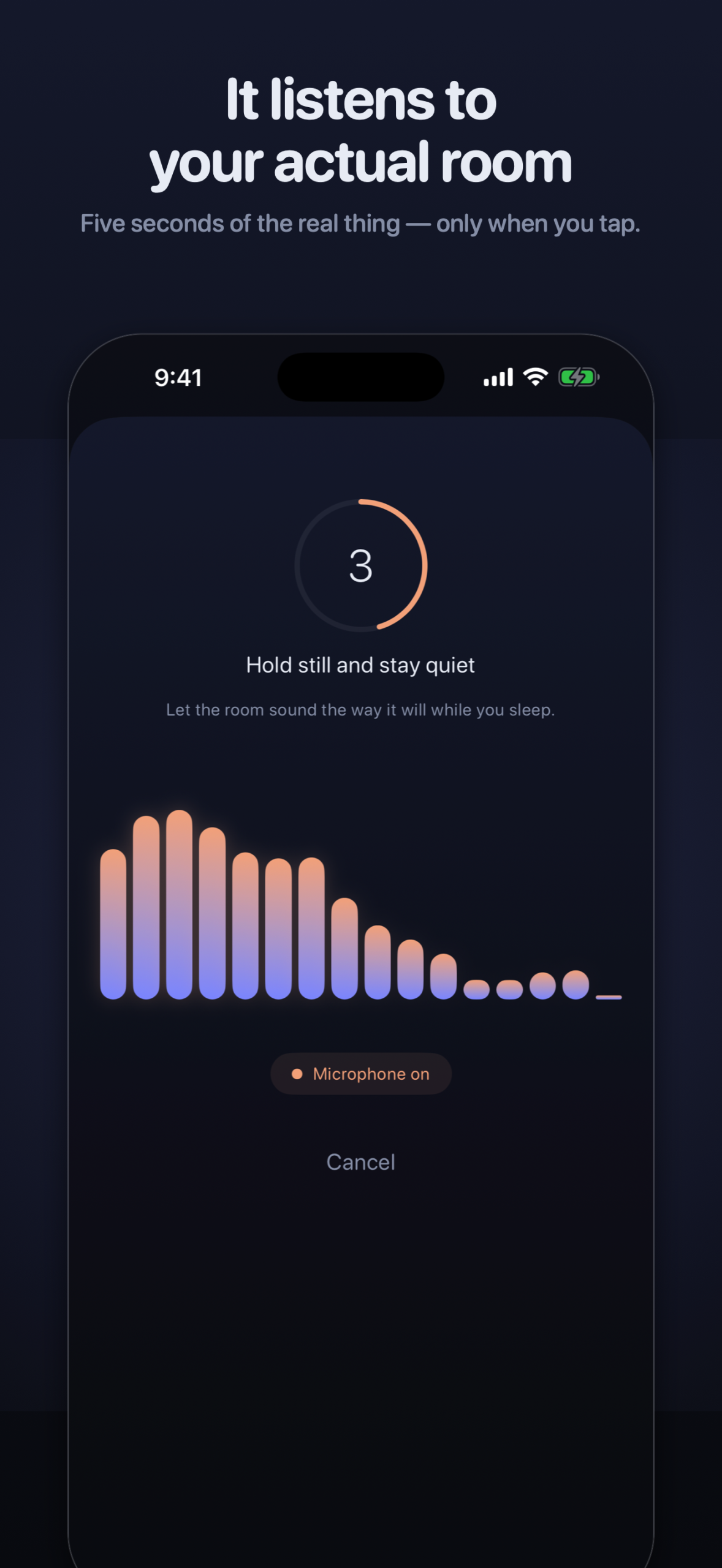
RoomTone takes a different angle on the same problem: Match My Room shows you a live spectrum of what the microphone is actually picking up while it listens, so you are looking at real information about your room instead of turning a dial and hoping. It won’t replace a calibrated meter if you need an exact decibel figure, but it replaces pure guesswork with something you can actually see.
Try RoomTone and see what your room is actually doing, instead of guessing at a volume slider in the dark.
Frequently asked questions
What decibel level is safe for white noise while sleeping?
For an adult bedroom, roughly 50–60 decibels is a reasonable range — about as loud as a shower running in the next room. For a nursery, keep it under 50 decibels, measured from where the baby’s ears actually are.
Can white noise damage your hearing?
At a moderate volume used for masking, there is no evidence of hearing damage. The real risk comes from running any sound too loud for many hours every night, since sound machines often play for six to eight hours straight — a volume that is fine for twenty minutes is a different exposure across an entire night.
How do I know if my white noise machine is too loud?
If turning it down does not noticeably reduce how well it covers other sounds, or if the sound itself feels uncomfortable, it is likely too loud. A phone-based decibel meter app can give you an exact reading if you want to check it against the ranges above.