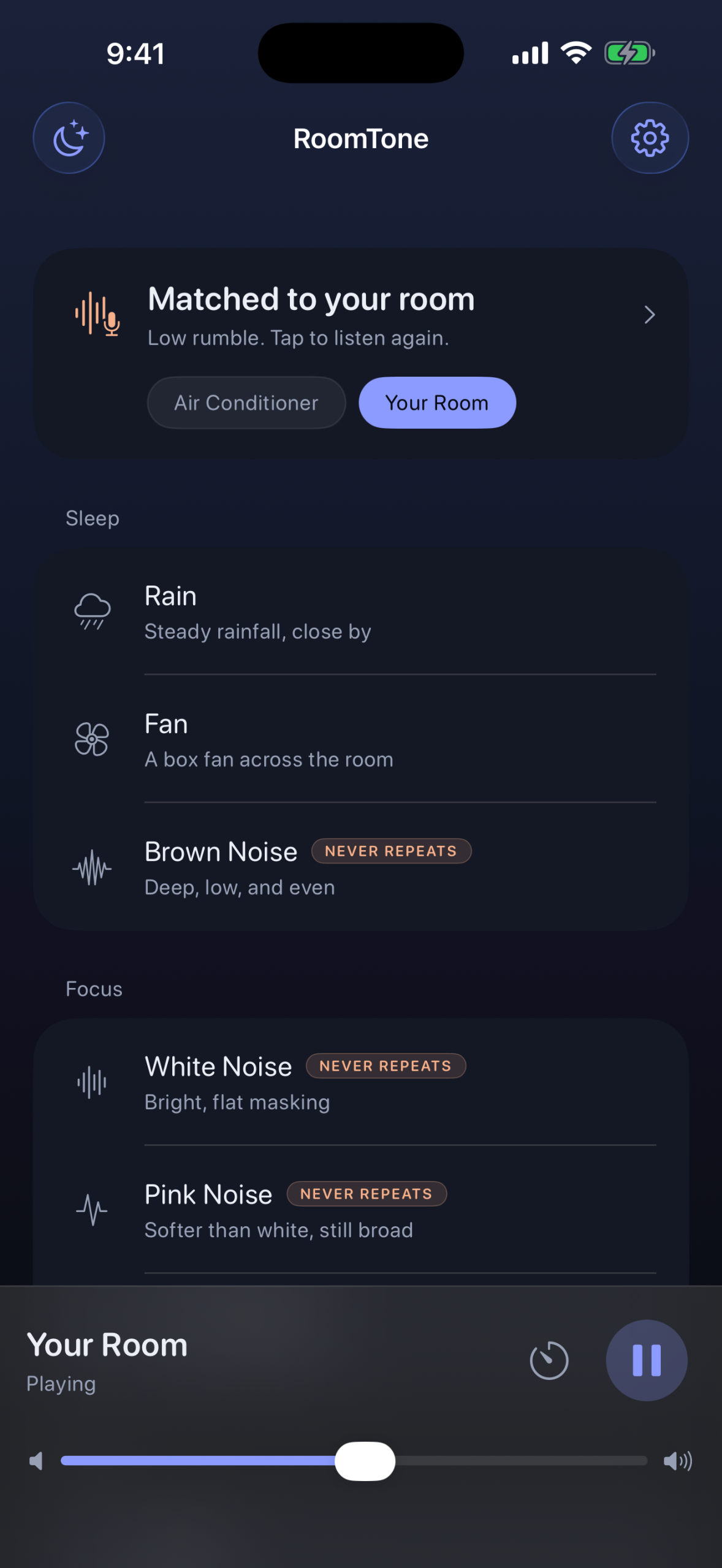
Sound masking is one of the most commonly used coping strategies for tinnitus, and one of the most inconsistently explained. It is not a treatment and it does not make tinnitus go away — but for many people, the right background sound makes the ringing considerably less noticeable, especially at night when there is nothing else competing for attention.
This is general information, not medical advice. If ringing in your ears is new, sudden, one-sided, or getting worse, see an audiologist or doctor rather than relying on masking sound alone.
How sound masking actually works
Tinnitus tends to stand out most in silence, because there is nothing else for your attention to land on. Audiologists commonly describe masking as introducing a broad, steady background sound that reduces the contrast between the ringing and total quiet — not by canceling the tinnitus itself, but by giving your attention something else to settle on. This is why masking is widely used as a coping tool, particularly at bedtime, even though it does not address the underlying cause.
Which sound actually helps varies by person
Tinnitus is not one fixed sound. Some people describe a high-pitched whine, others a lower hum, and the pitch that bothers you most is not the same for everyone. That is why sound recommendations for tinnitus vary so much between sources: broadband sound like white or pink noise covers a wide range and works for many people, while others find a deeper, low-frequency sound like brown noise or a fan more effective if their tinnitus sits higher in pitch. There is no single “best” sound for tinnitus — there is the one that happens to cover what you are hearing.
Why one fixed sound loop often falls short
Most sleep-sound apps hand you a small, fixed set of loops and leave you to guess which one helps. Given how much tinnitus pitch varies person to person, that is closer to a coin flip than a solution — and if the first sound you try does not help, many people conclude masking “doesn’t work for them,” when really they just tried the wrong sound.
RoomTone gives each of its nine sounds five tonal takes running from deep rumble to bright, so trying a genuinely different shade of a sound does not mean downloading a different app or hunting through a long list — it is closer to adjusting a tone control until something actually covers what you are hearing.
Try RoomTone and find the tone that actually matches what you hear, instead of settling for whichever generic loop came first.
Again: sound masking is a coping strategy some people find helpful, not a treatment for tinnitus. If tinnitus is affecting your daily life, an audiologist can help identify the cause and the options that fit your situation specifically.
Frequently asked questions
Does white noise actually help tinnitus?
Sound masking is a widely used coping strategy for tinnitus — many people find that a broad, steady background sound makes the ringing less noticeable, especially at night. It does not treat or cure tinnitus; it changes what your attention settles on.
What’s the best sound for tinnitus, white noise or brown noise?
It depends on the pitch of your tinnitus. Broadband white or pink noise covers a wide range and helps many people, while brown noise’s deeper, lower-frequency sound helps others, particularly if their tinnitus sits higher in pitch. There is no single best sound — matching the sound to what you actually hear matters more than the label on it.
Can white noise make tinnitus worse?
Used at a reasonable volume — around or just above the loudness of the ringing, not louder — sound masking does not damage hearing or make tinnitus worse. Playing any sound too loud for too many hours can contribute to hearing strain over time, which is why volume and duration matter more than the specific sound you choose.